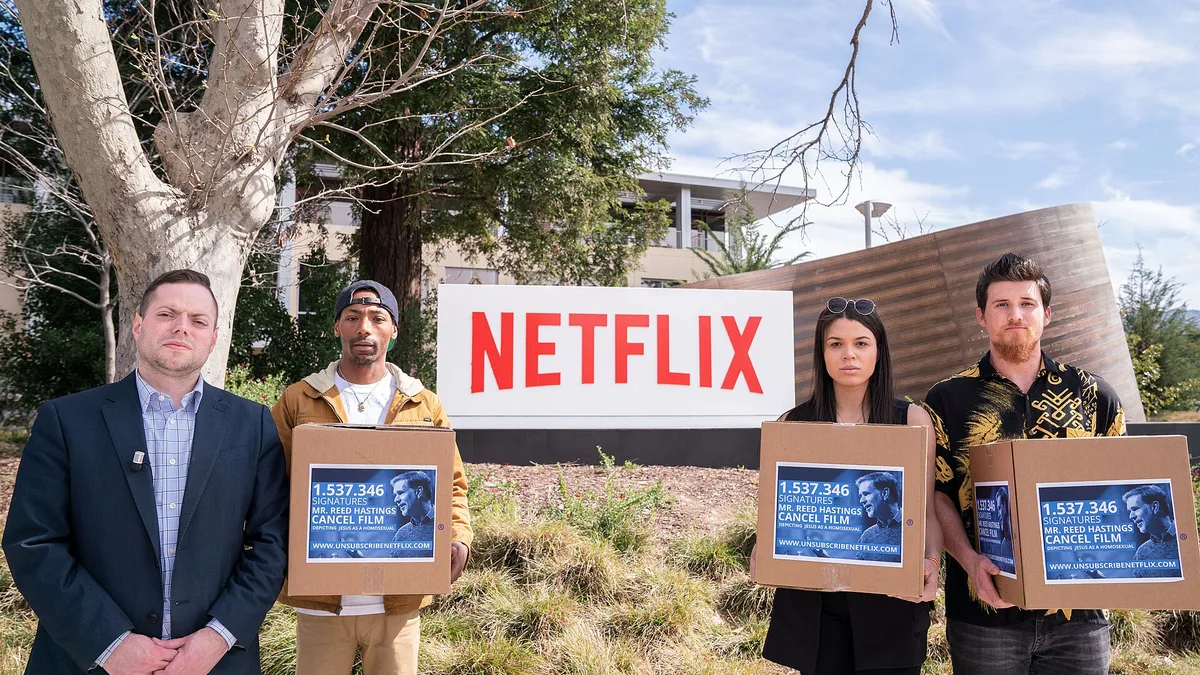
Netflix
| Original use | Timekeeping |
|---|---|
| First created | 20th century |
| Country of origin | Switzerland |
| Movement type | Quartz |
| Case material | Stainless steel |
| Water resistance | 50 meters |
| Band material | Stainless steel |
| Clasp type | Deployment clasp |
Origin and history
Netflix was founded in the United States during the late 1990s. Its initial business model was a DVD-by-mail rental service, operating on a per-rental fee basis. The company introduced a subscription model in the following years, eliminating due dates and late fees, which distinguished it from traditional video rental stores. A pivotal shift occurred in the 2000s when Netflix began streaming content online, initially as a complementary service to its physical rentals. This streaming platform gradually became the company's primary focus, leading to an international expansion that commenced in the 2010s. The company began producing its own exclusive content, known as Netflix Originals, in the early 2010s, fundamentally altering its role from distributor to studio and defining the modern streaming era.
What it is for
Netflix is a subscription-based streaming service for films and television series. It provides on-demand access to a licensed library of content across numerous genres, including documentaries, stand-up comedy specials, and animated features. A core function is the hosting and distribution of its proprietary Netflix Originals, which are films and series produced or commissioned by the company itself. The platform allows multiple user profiles under a single account, with algorithms providing personalized content recommendations based on viewing history. It is designed for viewing on a wide array of internet-connected devices, including smart televisions, computers, tablets, and mobile phones. The service operates without a fixed schedule, enabling users to watch entire seasons of a series consecutively, a practice commonly known as binge-watching.
Pros and cons
A primary advantage is the extensive, on-demand catalog available without commercial interruptions during programming. The ability to create multiple user profiles allows for personalized recommendations and separate viewing histories within a household. The release model for entire seasons at once caters to viewers who prefer to watch at their own pace without waiting for weekly episodes. A significant drawback is the instability of the licensed content library, as titles frequently rotate off the service due to expiring licensing agreements. Users who select Netflix primarily for a specific licensed show often regret the subscription when that title is removed without warning. The common mistake is assuming the catalog is permanent, leading to frustration when planned viewing disappears; the service is best treated as a portal for its Originals and a rotating selection of other content, not a permanent archive.
Who it suits
This service suits viewers who prioritize convenience and control over their viewing schedule, free from broadcast timetables or commercial breaks. It is well-matched for households with diverse tastes, as multiple profiles can tailor recommendations for different family members. Binge-watchers who prefer to consume an entire narrative arc in a short period are particularly well-catered to by the full-season release model. The platform appeals to those interested in a specific slate of award-winning or niche original programming that is not available on other services. It is less suitable for viewers whose primary interest is accessing a stable, permanent library of specific classic films or network television series from other studios. Casual viewers who do not consume enough content monthly to justify a recurring subscription fee may find better value in transactional rental options.
Latest Netflix news
Latest reporting

Cyberpunk: Edgerunners 2 Premieres October 2026 on Netflix
Studio TRIGGER returns to animate Cyberpunk: Edgerunners 2, a 10-episode standalone season premiering exclusively on Netflix on October 20, 2026. The...

Dragon Ball Super: Beerus Streaming Release Date Set
Crunchyroll will stream the enhanced Dragon Ball Super: Beerus anime globally on October 11, with a Netflix U.S.

Steel Ball Run Anime Launches Weekly on Netflix
The anime adaptation of JoJo's Bizarre Adventure Part 7: Steel Ball Run began exclusive global streaming on Netflix on September 25, 2026.
Netflix Streams English-Dubbed Trailer for The Ramparts
Netflix released an English-dubbed trailer for The Ramparts of Ice season 2, coinciding with the anime's global premiere.

Steel Ball Run Ending Theme Sparks Fan Backlash Over Dr. Luke
Fans are demanding Netflix change the ending theme for *Steel Ball Run JoJo's Bizarre Adventure* due to producer Dr.

Cyberpunk: Edgerunners 2 First Episode Screened
Cyberpunk: Edgerunners 2 premieres October 20 on Netflix. The first episode, previewed at Gamescom, focuses on memory and new characters in Night...